
Common Reasons for Work Visa Rejection & How to Avoid Them
This is one of the most frustrating episodes, not just for the applicant but also for the employer in a work visa application. The employer has to wait for the applicant to get their visa, which can affect their productivity to fall or suffer at least. We are often asked at Starfish Corporation what can be done in such a scenario. Let us understand.
Understanding The Visa Refusal
Whenever a visa application is denied, the chances of visa approval decline for the next application. This doesn’t at all mean that a visa isn’t possible; it means something different has to be done to convince the officer in charge of the consular section at the embassy. Our visa refusal experts at Starfish Corporation explain that in order to get the visa successfully next time applicant must change his entire circumstances or prove that his last visa rejection was a mistake made by the consulate of the embassy. What if we tell you that it is relatively easier than it looks or sounds? First, let us understand the basics of work visa rejections.
- Incomplete Documents – Missing or incorrect paperwork is the most common reason.
- Insufficient Funds – Bank balance doesn’t meet visa requirements.
- Weak Travel History – No prior visas or international travel record.
- Unclear Purpose of Travel – Visa officer not convinced about your reason.
- Fake or Suspicious Documents – Any forged paper leads to rejection + possible ban.
- Interview Performance – Confident and truthful answers matter.
- Invitation Letter Issues – Invalid, expired, or unverifiable invitation.
Understanding The Reasons Of Refusal
Misrepresentation:
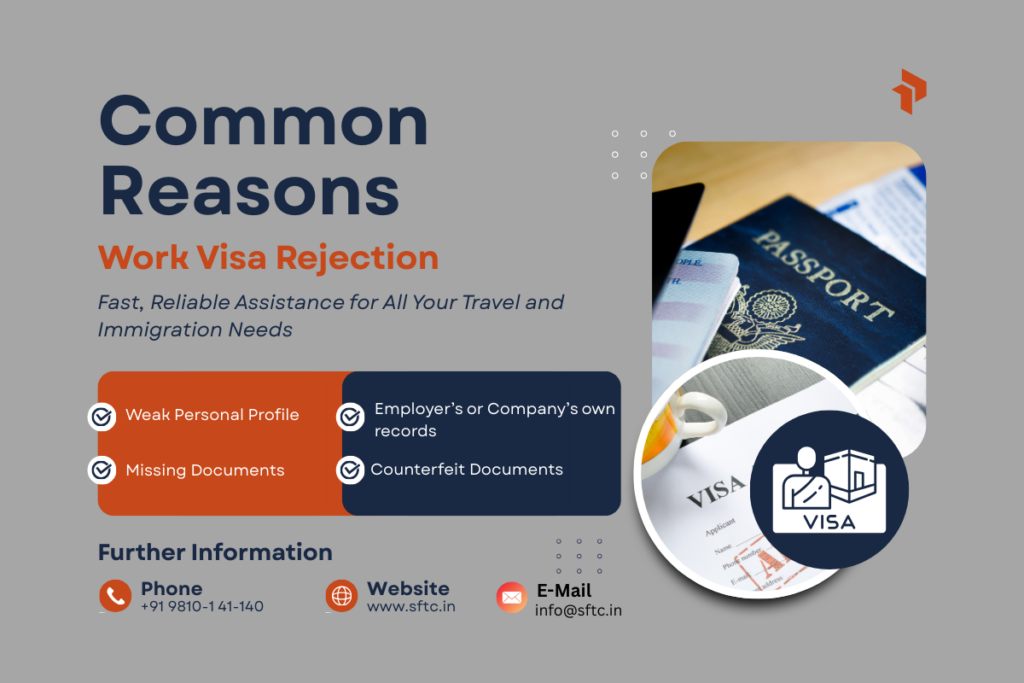
Ironically, it may seem, but this is one of the most common reasons for rejection. The applicant somehow fails to represent his case in a convincing manner. See, this is not a tourist or visit visa case; one is working on it, it is a work visa, most probably providing a legal money-making way of long-term settlement in that country, and it is very important to represent the case in a very convincing manner. Even small errors in work permits, job contract or offer letters can make an entire application fall. We at Starfish Corporation are very careful in presenting complete details about yourself and why is it that you have chosen to work in that company. This may clear some of the doubts that have clogged the positive flow of results on your side. Give multiple looks at your visa application before you go on and submit it.
Missing Documents:
Yes, it is not just an error, but a complete disaster if you fail to align all the necessary and relevant documents to support your candidature. Our Starfish Corporation visa experts ask how one can prove their application’s worth unless their own case is missing the super-important proofs required to legally award them the entry clearance and work in that country? Your documents must be aligned as per the requirements prevalent to that country. Cross-verify with the VFS or the consulate section if necessary.
Weak Personal Profile:
This is also one of the most prevailing reasons for a refusal. The applicant will have to prove his worth for that vacancy by showing his experience or academic qualifications. Starfish Corporation’s (SFTC) visa experts argue that any mismatch between the vacancy opted for, and the personal records of the candidate can create doubts in the mind of counsellors and may result in visa denial. One must be very careful in this aspect. Cross-check the vacancy with your own profile before filing the application to avoid refusals coming from this reason.
Counterfeit Documents:
This may need no long explanations; any document forged to influence the visa outcome is not just wrong but illegal and may invite legal actions as per the norms of the consular sections in such cases. Starfish Corporation team makes this clear statement that one should be very wary that one’s own visa application will not just be declined but will be subject to long-term blacklisting from any further visa application of that country for any category. If the country is a Schengen state, then this suit is most likely to be followed by other member states as well.
Employer’s or Company’s own records:
This is an uncommon but possible scenario that the employer hiring someone may have a negative record of hiring such people in the past by taking a “fee” to provide their offer or contract letter. The visa experts in the Starfish team have seen such cases in the past, and they say if caught, that employer will be blacklisted and appropriate actions will follow upon him, including hefty fines and bar orders from any further recruitment. This definition is a very fertile ground for visa refusal.
Conclusion
Any applicant hoping for a successful and seamless immigration process must be aware of the typical grounds for work visa denials. Incomplete paperwork, inadequate financial evidence, a lack of legitimate job offers, a poor travel record, or mistakes on application forms account for the majority of rejections.
Applicants should carefully read the visa requirements, provide accurate information, and make sure all supporting documentation is legitimate and properly verified in order to prevent these problems. The likelihood of approval is greatly increased by thorough planning, explicit employment contracts, and evidence of qualifications. Applying well in advance of deadlines and closely adhering to embassy regulations are also advised. You can improve your profile and further minimize errors by seeking expert advice from knowledgeable visa consultants.
FAQs
What is the most frequent explanation for denying a work visa?
Incomplete or inaccurate documentation is the most frequent cause of work visa denials. Refusal may result from incomplete financial documentation, void employment offers, or inaccurate information on forms. Verify documents one last time before submitting them.
Even when documents are authentic, can inaccurate information lead to rejection?
Yes. Even inadvertently giving inaccurate or inconsistent information can lead to rejection. Inconsistencies between resumes, forms, and supporting documentation are taken seriously and could have an impact on subsequent visa applications.
How can applicants prevent being denied a work visa?
Read the visa requirements carefully, get all the paperwork ready ahead of time, confirm the legitimacy of the employer, keep enough money on hand, and go over your application several times before submitting it. One of the best ways to avoid rejection is to strictly follow the instructions provided by the official embassy.