
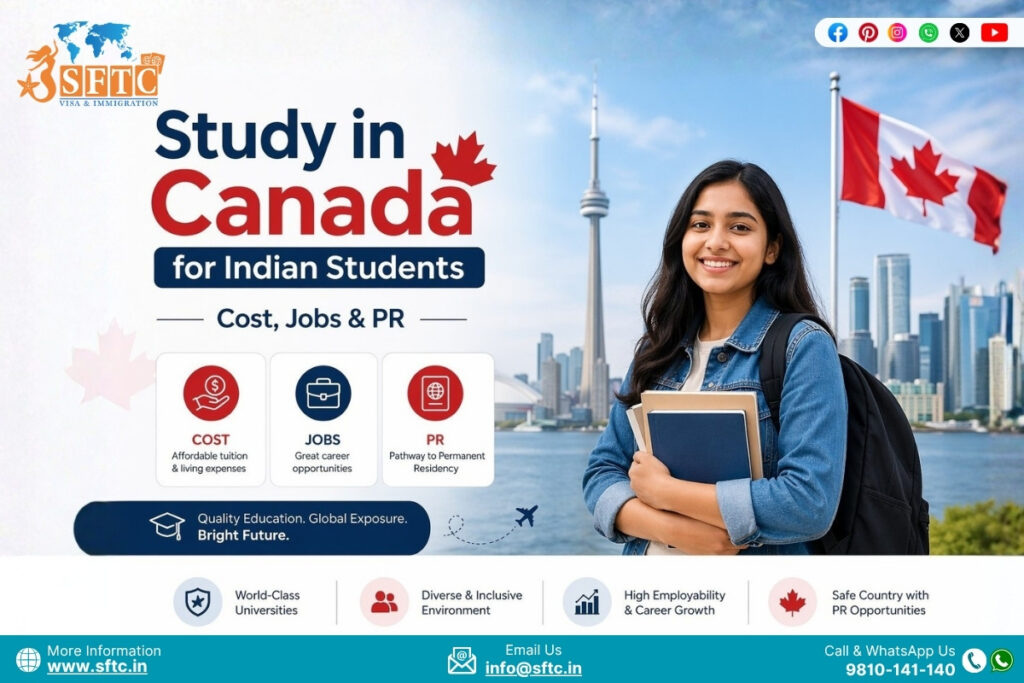
Study in Canada for Indian Students – Cost, Jobs & PR
Indian students who want to get more global exposure, get a better education, and grow their careers over time have made the strategic choice to study abroad. Canada is still one of the most popular places to visit from other countries because of its high academic standards, diverse culture, and strict immigration rules.
This complete guide from SFTC (Starfish Travel Corporation) covers everything you need to know about studying in Canada, such as the cost structure, part-time job options, and permanent residency (PR) pathways.
Academic Overview of Studying in Canada
People all over the world know that Canada’s schools are good because they focus on hands-on learning, research-based curricula, and programs that prepare students for jobs. Schools in Canada focus on developing skills, which makes it much easier to get a job after graduation.
International students can study for diplomas, bachelor’s degrees, and master’s degrees in a wide range of subjects. One of the best things about studying in Canada is that you can get Canadian work experience while you’re still in school or after you graduate. This is very important for getting permanent residency.
- Degrees that are recognised all over the world
- Flexible academic structure
- Programs that combine work and learning
- Eligibility for a Post-Graduation Work Permit (PGWP)
- Lots of good chances to move to PR
How much does it cost for Indian students to study in Canada?
There are two parts to the total cost of studying in Canada: school costs and living costs. To make sure that students can support themselves while they are in Canada, colleges and universities there require proof of financial stability.
Students need to think about more than just tuition. They also need to think about where they will live, how they will get around, what they will eat, insurance, and money to help them get settled. The Student Direct Stream (SDS) path requires a set amount of money to be deposited through a Guaranteed Investment Certificate (GIC) to cover living costs.
Detailed Cost Structure
Category | Estimated Annual Cost |
Diploma Programs | CAD 12,000 – CAD 18,000 |
Undergraduate Programs | CAD 15,000 – CAD 30,000 |
Postgraduate Programs | CAD 18,000 – CAD 35,000 |
Living Expenses | CAD 10,000 – CAD 15,000 |
GIC Requirement | CAD 20,635 (mandatory) |
Visa & Medical Charges | CAD 150 + ₹5,000–₹8,000 |
- Total yearly budget: about CAD 25,000 to CAD 45,000
- The cost of living is different in each city (Toronto and Vancouver are more expensive).
- GIC is required for people applying for an SDS visa.
- Planning your finances early increases your chances of getting a visa.
Part-Time Work Opportunities in Canada
Under strict immigration rules, international students in Canada can work part-time while they are in school. The goal of this policy is to help students with money while keeping their focus on schoolwork. Part-time work also helps you get more experience and improve your communication skills.
- During school hours, up to 20 hours a week
- You can work full-time during scheduled breaks.
- There are jobs on campus and off campus.
Detailed Cost Structure
Job Category | Hourly Wage |
Retail & Sales | CAD 12 – CAD 16 |
Warehouse & Logistics | CAD 14 – CAD 20 |
Food & Hospitality | CAD 12 – CAD 18 |
Delivery Services | CAD 15 – CAD 22 |
Customer Support | CAD 16 – CAD 25 |
Permanent Residency (PR) Pathways in Canada
Canada is home to one of the best-organised immigration systems for students from other nations. Students are able to obtain a post-graduation work permit (PGWP) once they have completed their studies. This allows them to gain experience working in Canada.
This job experience is very important for getting permanent residency in Canada, which uses a points-based immigration system that looks at things like education, age, language skills, and work experience.
Permanent residency in Canada provides enduring stability and various social, economic, and professional advantages. It lets people live and work in Canada without any restrictions and gives them rights that are similar to those of citizens (except the right to vote).
For Indian students, getting a PR is often the last step after finishing school and getting some work experience.
- The right to live and work in Canada forever
- Getting free healthcare from the government
- Government benefits and social security
- The right to switch jobs or industries
- Able to sponsor family members
- Pathway to Canadian citizenship after the qualification period
Why planning your intake is important for PR success
Intake planning isn’t just about when to apply; it also affects visa approval, course availability, and job prospects. Early applications for intake make it easier to choose the right courses, get scholarships, and get your visa processed.
Intake | Advantage |
Fall (September) | Maximum PR-friendly courses & job opportunities |
Winter (January) | Backup option with moderate competition |
Summer (May) | Limited programs but flexible entry |
Conclusion
For Indian students who want to get a global education, work experience abroad, and the chance to settle down for good, studying in Canada is one of the best choices they can make. Canada has not only excellent academic programs, but it also has a clear path for students to go from school to work and then to permanent residency (PR).
Canada is a very popular place to study because it has affordable study options, part-time jobs, a Post-Graduation Work Permit (PGWP), and immigration-friendly policies. But to be successful on this journey, you need to plan ahead, pick the right course, and apply for your visa on time.
SFTC (Starfish Travel Corporation) can help students make the whole process easier, from choosing a university and getting the right paperwork to getting their visa approved and planning their move. A well-thought-out plan will help you get better job results, more money, and a better chance of getting PR in the future.
FAQs
1. Is Canada a good option for Indian students in 2026?
2. Can students stay in Canada after completing their studies?
3. Which cities are best for Indian students in Canada?
Disclaimer: All the details mentioned in the article are subject to change without any prior notice. Always cross-verify the visa & immigration requirements and policies with the concerned consulates before filing the application.