
By Starfish Corporation: Yashdeep Malik & Shivani Sharma
Date: 28-SEP-2026
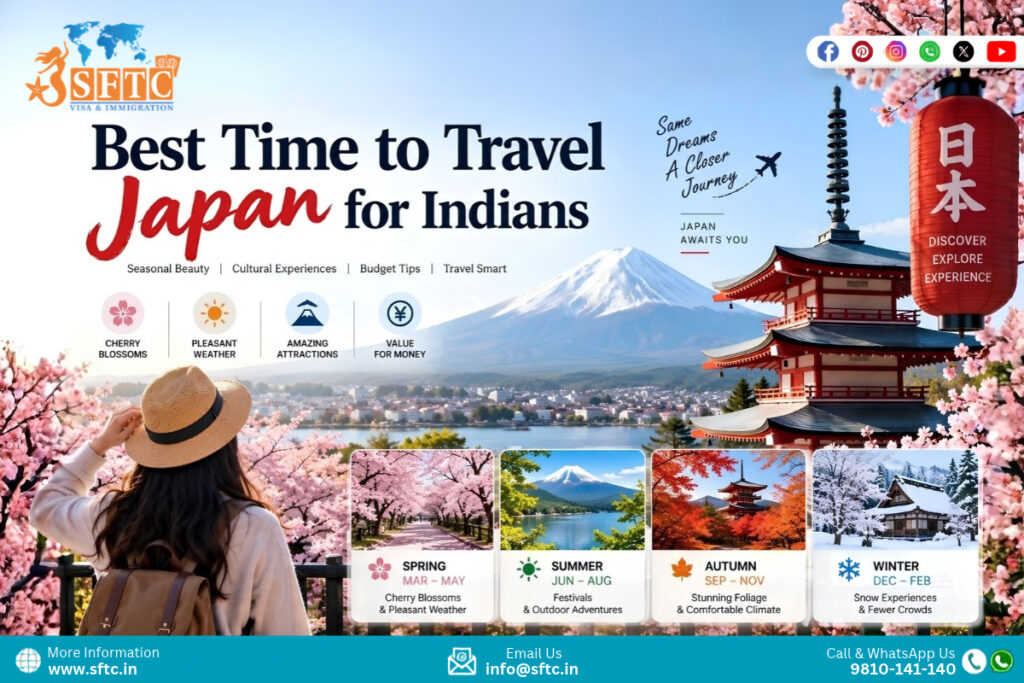
Best time to travel Japan for Indians
Japan’s exceptional blend of the ancient and modern makes it an amazing travel destination. Mount Fuji and other temples in Japan offer a unique experience to Indians who may have never left their country before. With only a couple of hours of flight time between India and Japan, Tokyo and other Japanese cities are easily within reach. With so many places to visit and experience, you have to plan your trips according to the seasons in order to experience all the things Japan has to offer.
This book contains all the information needed to pick the best time to go according to your preferences. It explains the positives and negatives of each season based on what an average Indian traveller may look for when planning a vacation. It goes over Japan’s different seasons and gives examples of Japan’s different festivals.
Spring (March-May): Flowering Season and Weather
Spring is the second busiest travel season to Japan after the holiday season. Japan is famous for its cherry blossom festivals. Between the months of March and May, the entire country is ablaze with pink and white hues of these elegant flowers.
A Travel Experience Like No Other
Tens of thousands of people from around the world gather in Japan just to witness the cherry blossoms. The southern regions of Japan start experiencing blooms from the end of March. By the beginning of April, the blooms reach their full potential in and around Tokyo and the following week in Kyoto.
March-April is an enchanting time to partake in flower viewing (hanami) parties. Visitors are encouraged to bring a spread to enjoy under the blossoms in parks. People take floats and coolers to festivals to enjoy the party atmosphere among thousands of merry revellers.
A Travel Experience Like No Other
- Advance Bookings: Book as far in advance as possible as the travel window opens. Flights and hotels fill up well in advance.
- Sakura Forecast: Keep an eye on the cherry blossom forecast to find out when and where they are expected to bloom to plan your trip accordingly.
- Off the Beaten Path: If you’re tired of the hustle and bustle of the big cities, check out less frequented parks and towns.
June-August: The Season of Fests and Hikes
Summer in Japan is famous for its firework displays and festivals. While the humidity can be unbearable, many travellers find the extreme heat and humidity to be better than the cold and dry winter.
Fireworks and Festivals
Japan is known for its beautiful summer fireworks displays and festivals. Firework displays draw huge crowds. Festivals offer the opportunity to see various cultural performances and sample local foods.
Tips for Indian Travellers
- Deeper Understanding of the Local Climate: Many places of interest in Japan are outdoors. Therefore, during the hot afternoons, you should go out only if necessary and cover up as much as possible. You should carry a small bottle of water and drink it only if absolutely necessary.
- Appropriate Clothing: Wear as little clothing as possible while still adhering to cultural norms, and ensure the clothing you wear covers as little of your body as possible.
- Sensible Planning: Be sure to go shopping and visit the many museums during the hot afternoons. These can also be done on rainy days.
Winter (December-February): Snow and Hot Springs
During the winter months, Japan transforms with beautiful scenes of the country covered in snow, traditional hot springs (onsen), and unique festivals. It is a little busy during this season because of the snow, but still very beautiful and peaceful.
Skiing/Snowboarding and Onsen
For many travellers, the winter months mean hitting the slopes in Japan, which has some of the best ski resorts and powder. The northern part of Japan, including Hokkaido, is very cold and has some beautiful snow and ice festivals. Onsens are also very popular in the winter because they help to relax and soothe the body.
Tips for Indian Travellers
- Bring Warm Clothing: It is very important to be prepared for the cold by wearing good quality and warm clothing.
- Learn Onsen Manners: There is a proper way to do everything at an onsen, and it is important to learn this in advance.
- Prepare for the Weather: Because of the cold and potentially treacherous weather, plan your routes and transportation and stay near main roads.
Season | Highlights | Pros for Indians | Cons for Indians |
Spring | Cherry Blossoms, Festivals | Pleasant weather, beautiful scenery | Crowds, high cost |
Summer | Fireworks, Festivals, Hiking | Lively atmosphere, hiking, beaches | Hot/humid, rainy season |
Autumn | Foliage, Cultural Events | Stunning foliage, mild temperatures | Crowds, moderate cost |
Winter | Snow, Onsen, Skiing | Snow sports, onsen, peacefulness | Cold, shorter days |
Conclusion
The best time to go to Japan for Indians is whatever time works best for you. Many people like to go to Japan to see the cherry blossoms. If you are one of those people, you should go in the spring. The weather is nice, and the flowers are beautiful. However, there are a lot of tourists, and the prices are higher. In the summer, there are a lot of beautiful and unique festivals and events. The hiking trails are open, and the mountainous areas are beautiful. If you don’t like the heat and humidity, you may want to avoid the summer. In the fall, the leaves change, and there are nice colours all over Japan. If you don’t like cold weather, you may want to avoid Japan in the winter. There are a lot of beautiful and unique activities and things to see throughout all of Japan in the winter.
No matter what time of year you decide to go to Japan, you will probably want to do a lot of planning and get everything organised beforehand. If you want to take the stress out of planning your trip and need some assistance, contact SFTC (Starfish Travel Corporation). We have amazing Japan travel packages and work hard to give our customers the trip of a lifetime.
We want to help you plan your dream trip to Japan! Contact us for more information!