By Starfish Corporation: Yashdeep Malik & Shivani Sharma
Date: 04-Nov-2026
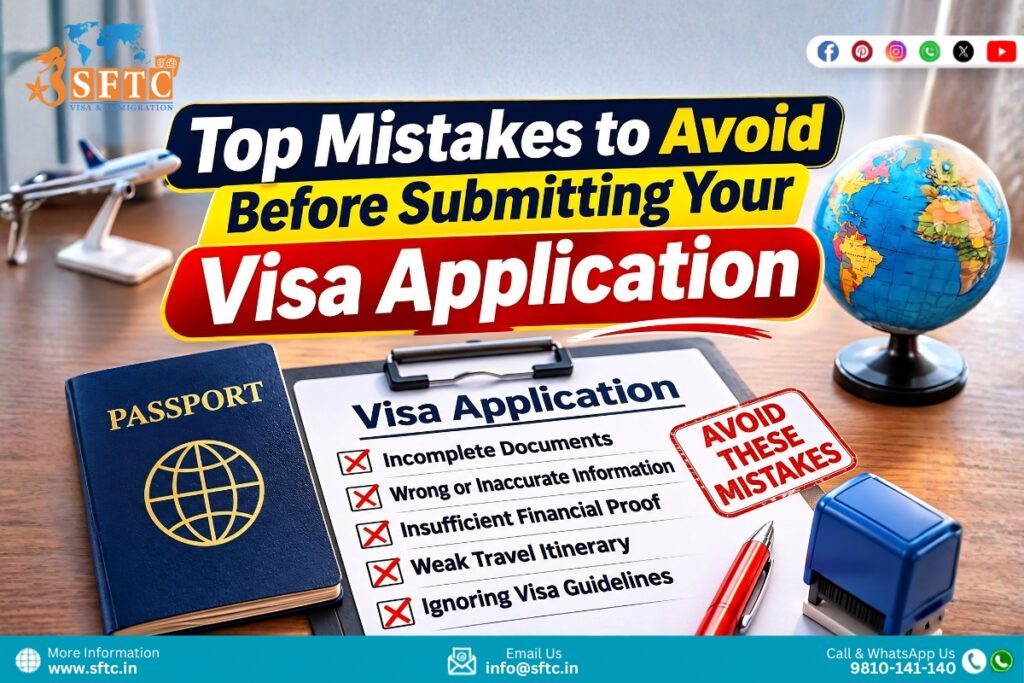
Top Mistakes to Avoid Before Submitting Your Visa Application
Applying for visas for countries like the US or UK can be a long, stressful process. Sometimes there are long delays for no reason. Making small mistakes can delay the process or outright result in a visa denial. The UK, US, and other countries set stringent rules for immigration and consular services. Careless mistakes can result in long processing delays or a denial.
There are a number of details to consider when preparing visa application documents. To guide you in avoiding the most common mistakes in visa application processes and to have a stress-free process, learn more in the pages that follow.
1. Misspellings and Mismatched Details
One of the primary causes of visa delays is data inconsistencies in the applicant’s supporting documents. Consular officers scrutinise each field in the visa application form and reference the applicant’s official records.
- Name spelling errors: Entering your name differently from how it is in your passport creates automatic red flags.
- Passport Number and Expiry Date: Careless errors in the passport number and the date of expiry can also result in administrative rejection.
- Inconsistent Addresses: Ensure the address mentioned in the visa application is the same as in your official identity proofs, bank records, and other documents submitted with the file.
2. Inadequate or Irregular Financial Documentation
Financial documentation immigration authorities have the right to check your financial documentation to assess if you will be self-sufficient during your stay and will not rely on unauthorised employment or public funds. Incomplete financial documentation may lead to a refusal.
- “Parked” Funds: A large amount of money being deposited in your bank account right before the application raises suspicion and requires adequate documentation to explain the funds (e.g., property sale deed, maturity of fixed deposits, or gift deed).
- Uncertified Statements: Informal online bank statements or statements without verifiable QR codes.
- Missing Tax Returns: Failing to provide recent Income Tax Returns (ITR) or proof of income.
3. Submitting Expired or Non-Compliant Documents
Submitting expired or improperly formatted documents can cause immediate application holds.
Document Category | Common Requirement | Frequent Mistake to Avoid |
Passport | Minimum 6 months validity beyond the intended return date; 2 blank pages. | Applying with a passport expiring in less than 6 months or with damaged pages. |
Photographs | Exact biometric specifications (e.g., 35x45mm, white background, neutral expression). | Uploading old passport photos, photos with shadows, or wrong background colours. |
Translations | Certified English/official destination language translations. | Submitting regional language documents without certified professional translation. |
Travel Insurance | Adequate medical coverage meeting embassy minimum thresholds (e.g., €30,000 for Schengen). | Purchasing policies that exclude repatriation or fail to cover the full trip duration. |
4. Vague or Contradictory Travel Itineraries
Visa officers decide if your travel itinerary is realistic, thought-out, and financially viable.
- Raising Doubts: Claiming you will be travelling to numerous different cities that are far from one another and taking an unrealistically short time to do so without proper transit arrangements will definitely raise doubts.
- Inconsistency: The dates of your booked flights and hotel stays, as well as the requested validity of your visa, must be consistent.
- Unverified Reservations: Booking dummy hotel stays and cancelling the reservations before they’re verified can also result in a refusal because of false documents.
5. Failing to Demonstrate Strong Ties to Your Home Country
To obtain a non-immigrant visa (e.g., for tourism or education/study), you must show the consulate that you intend to return to your home country at the end of your authorised stay.
Failing to demonstrate strong ties is one of the most common reasons an immigration visa application is refused under standard immigration laws worldwide.
5. Failing to Demonstrate Strong Ties to Your Home Country
- Employment: Approved leave letters from your employer, your employment contract, and your latest payslips.
- Business: Articles of company registration, business bank statements, and business tax records.
- Property: Title deeds to land/property, and long-term investment portfolio.
- Family Obligations: Marriage certificate and birth certificates of dependent children and/or proof of care for dependent elders.
6. Concealing Past Visa Refusals or Immigration History
Leaving out a previous visa denial or deportation, for example, is a critical error. Immigration officers have international biometric and immigration databases. They’re typically able to find information about an applicant, including a previous denial, through those databases.
- The Trap: Many applicants believe that a previous denial in one country would not impact an application in another country.
- The Consequence: Non-disclosure is considered misrepresentation, or worse, fraud, and may result in a lifetime travel ban.
- The Correct Approach: Be completely up-front and honest about all previous denials. For example, include a cover letter outlining your reasoning for the previous denial and explain what you have done to change for this application.
7. Applying Too Late or Choosing the Wrong Visa Category
There are two main types of mistakes that affect your travel plans. The first type is related to timing. The second type is related to choosing the right category.
- Applying Too Late: Visa processing is seasonal. If you submit your application only a few days before your planned travel date, there may not be enough time for administrative processing, biometric appointments, or verification of the documents.
- Picking the Wrong Visa Category: Applying for a tourist visa to attend a business conference, short course, or unpaid internship may result in an immediate rejection. You should always choose the visa category that corresponds with the main purpose of your trip.
Conclusion
There are different factors that affect whether your visa application is successful. Some of these include the organisation of your documents, how complete your documents are, and how accurately you present the details in your documents. For your visa application to be successful, you need to adequately present the details, organise your finance-related documents transparently, and effectively plan your itinerary. Bringing in a professional to assist you through the process of organising your visa application can save you time and money.
The SFTC (Starfish Travel Corporation) helps its clients seeking to travel internationally by offering visa application assistance, travel itineraries, and document consultation. Working with SFTC gives its clients an opportunity to plan their travels and ease their minds about the possibly complicated embassy rules, ever-changing document checklists, or varying country-specific requirements.