
By Starfish Corporation: Yashdeep Malik & Shivani Sharma
Date: 03-Oct-2026
Tourist Visa vs Visitor Visa: What Is the Difference?
Planning a trip often brings up a confusing list of travel documents, entry permits, and visa categories. One frequent point of confusion for travellers is understanding the distinction between a tourist visa and a visitor visa.
While everyday conversation often uses “tourist visa” and “visitor visa” interchangeably, immigration authorities across the globe treat them with legal definitions, documentation checklists, and eligibility criteria. Applying under the wrong classification can lead to unnecessary delays, heavy scrutiny, or even outright visa refusal.
This guide breaks down everything you need to know about tourist and visitor visas, how they differ, real-world examples by country, and practical tips to ensure your application gets approved smoothly.
Understanding the Core Concepts
To grasp the difference, it helps to look at how immigration departments categorise short-term travel permits.
What Is a Tourist Visa?
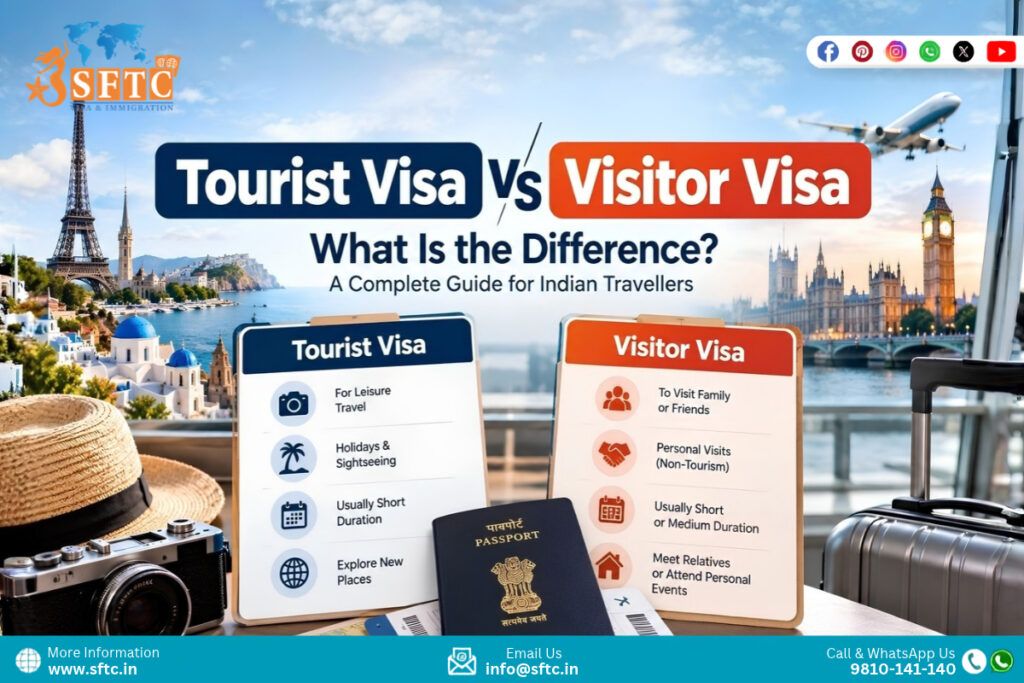
A tourist visa is a short-stay entry permit granted for recreational travel, sightseeing, vacations, and cultural exploration. When you hold a tourist visa, your primary goal is to explore the host country as a self-funded tourist or as part of an organised tour group.
Key traits of a tourist visa include:
- Primary Activity: Sightseeing, holidays, resort stays, and visiting tourist landmarks.
- Accommodation: Commercial lodging such as hotels, resorts, hostels, or rented holiday apartments.
- Funding: Self-funded through bank savings or prepaid tour packages.
- Key Documentation: Detailed day-by-day travel itinerary, confirmed hotel bookings, round-trip flight reservations, and proof of personal financial means.
What Is a Visitor Visa?
A visitor visa is often a broader immigration category designed for individuals entering a nation for private, non-commercial reasons other than pure sightseeing. In some jurisdictions, visiting family members attending personal milestones (such as weddings or graduations) or undergoing short-term medical consultations falls under this umbrella.
Key traits of a visitor visa include:
- Primary Activity: Visiting relatives or friends, attending family events, or conducting personal affairs.
- Accommodation: Staying at the residence of a host (friend, family member, or sponsor).
- Funding: Can be self-funded or sponsored by the host living in the destination country.
- Key Documentation: Official invitation letter from the host, proof of the host’s status (citizenship/PR/valid visa), proof of the host’s accommodation, and evidence of the relationship.
Tourist Visa vs Visitor Visa: Side-by-Side Comparison
To help you quickly identify which permit aligns with your journey, here is a detailed breakdown of the structural differences:
Feature | Tourist Visa | Visitor Visa |
|---|---|---|
Primary Purpose | Vacation, sightseeing, leisure, and holiday travel | Visiting family/friends, attending events, or private affairs |
Host Requirement | No host required | The host is required in the host country |
Accommodation Proof | Hotel or resort reservations | Invitation letter & host utility bills/lease |
Financial Sponsorship | Paid by applicant (self-funded) | Can be self-funded or host-sponsored |
Key Risk Factor | Weak proof of financial means or vague itinerary | Unclear ties to host or suspicious stay duration |
Common Examples | Schengen Tourist Visa, Japan Tourist Visa | US B2 Visitor Visa, Canada TRV (Family Visit) |
Country-Specific Frameworks Explained
Different countries organise their short-stay visa frameworks differently. Understanding how major destinations handle these categories helps avoid application errors.
1. United States (B1/B2 Visa)
The US Department of State combines these categories under the B1/B2 nonimmigrant visas.
- B1 covers temporary business activities.
- B2 covers both tourism and visiting friends or family.
While the visa stamp is B1/B2, your Form DS-160 application and interview answers must explicitly state whether your primary purpose is independent tourism or visiting a specific host in the US.
2. Schengen Area (Europe)
The Schengen Zone issues a short-stay Type C visa for up to 90 days. However, the consulate requires you to select a travel purpose on the application form:
- Tourism: Requires a prepaid hotel.
3. Canada (Temporary Resident Visa - TRV)
Canada issues a Temporary Resident Visa (TRV) for visitors, but the online portal adjusts the document checklist dynamically. Selecting “Visiting family” triggers fields for an invitation letter and host citizenship documents, whereas selecting “Tourism” requires flight and accommodation details.
4. Australia (Visitor Visa Subclass 600)
Australia clearly separates these paths into streams under Subclass 600
- Tourist Stream: For individuals travelling for holidays or visiting friends without a formal family sponsor.
- Sponsored Family Stream: For applicants sponsored by an Australian relative who may be asked to lodge a security bond.
How to Choose the Right Category for Your Application
Selecting the category comes down to two primary questions: Where are you sleeping?. Who is backing your visit?
Choose a tourist visa if:
- You are staying entirely in hotels, resorts, or rented vacation apartments.
- You are funding your trip out of your own bank account.
- You plan to travel across cities or regions independently.
- You do not have relatives or friends in the destination country who are hosting you.
Choose a Visitor visa if:
- You plan to reside at a friend’s or relative’s house during your stay.
- Your host is paying for your accommodation, food, or overall travel costs.
- You are travelling specifically for an event like a graduation, wedding, or family reunion.
- You need an invitation letter to justify your stay to consular officers
Common Mistakes That Lead to Visa Refusals
Applying for a visa without aligning your documentation with your stated purpose can trigger refusals. Watch out for these traps:
- Claiming Tourism While Staying with Family: If you apply as a pure tourist but list a relative’s residential address as your accommodation without providing an invitation letter, visa officers may view this as inconsistent or deceptive.
- Weak Proof of Ties to Home Country: Whether applying for a tourist or visitor visa, failing to prove strong employment, financial, or family ties to your home country remains the top cause for rejection globally.
- Mismatched Financial Figures: If your host claims full sponsorship but fails to provide bank statements or if your personal bank balance cannot cover your stated itinerary, your application will face heavy scrutiny.
Conclusion
Navigating visa regulations requires attention to detail, well-curated documents, and a clear understanding of consular guidelines. Selecting the category or submitting incomplete documentation can turn your travel plans upside down.
At SFTC (Starfish Travel Corporation), we simplify travel and visa processing. Our team of visa specialists conducts thorough profile evaluations, ensures your documentation matches embassy requirements, and drafts tailored cover letters to maximise your approval chances.
Whether you are booking a holiday trip or preparing an invitation-backed family visit, SFTC is here to guide you every step of the way. Reach out to SFTC today to start your visa application with peace of mind.
FAQs
1. Can I visit family members while holding a tourist visa?
2. Can I study on a tourist or visitor visa?
3. What happens if my visa application is refused?
Disclaimer: All the details mentioned in the article are subject to change without any prior notice. Always cross-verify the visa & immigration requirements and policies with the concerned consulates before filing the application.